

Donor Tissue Counseling
Female Infertility in New York City
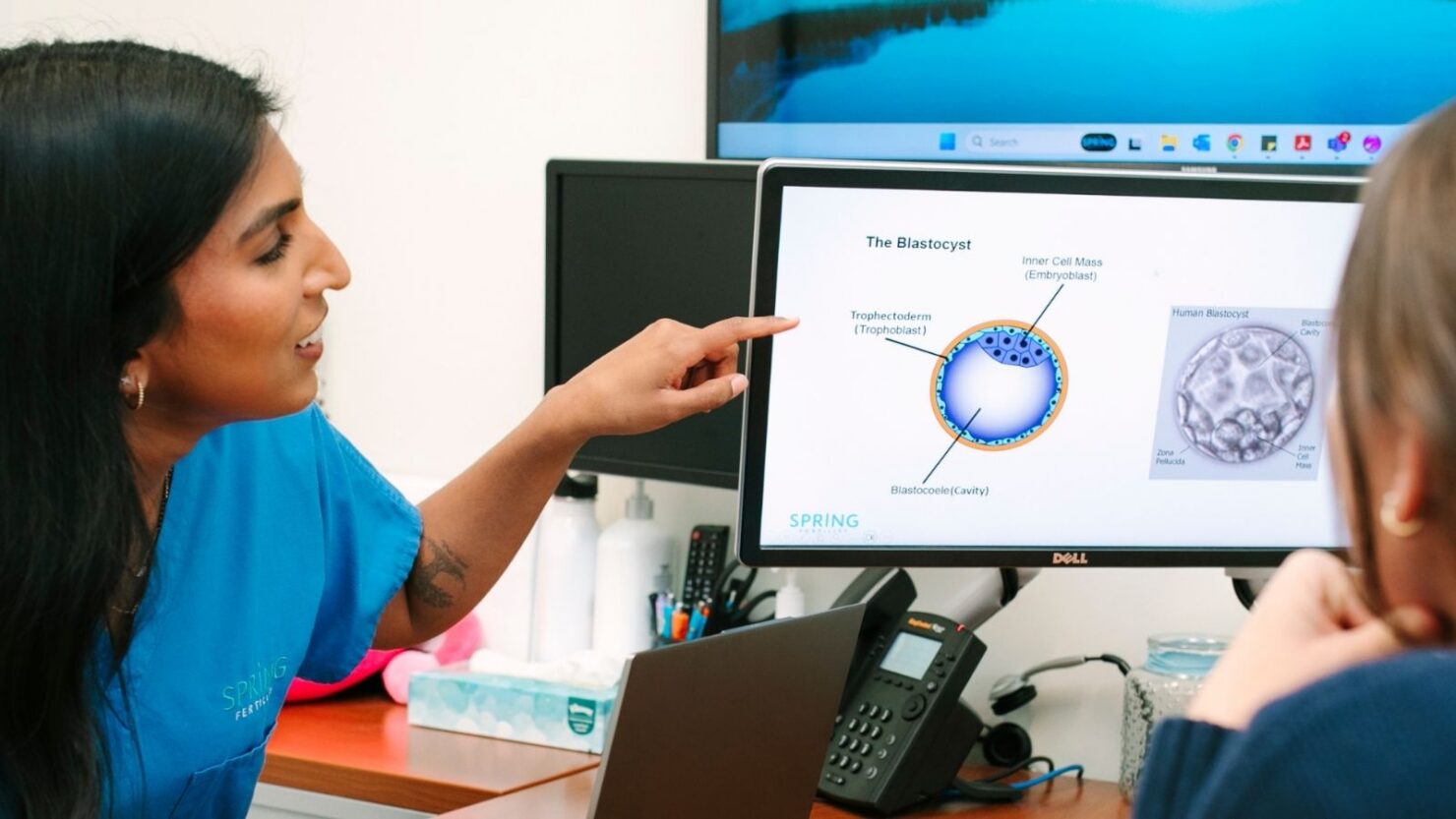
If you are having difficulty becoming pregnant, one of the first questions is often: why? Female infertility can result from many different reproductive factors, including problems with ovulation, ovarian reserve, the fallopian tubes, endometriosis, the uterus, or age-related changes in reproductive potential. Sometimes more than one factor is involved, and sometimes standard fertility testing does not reveal a clear explanation.
At Spring Fertility Bryant Park in New York City, infertility evaluation is designed to investigate the different biological steps required for pregnancy rather than assuming what may be causing the problem. Your fertility specialist can consider your reproductive history, ovulation, ovarian reserve, and reproductive anatomy while also evaluating sperm-related factors when applicable. The goal is to develop a clearer picture of what may be making conception more difficult and what, if anything, should happen next.
Summary:
-
- Female infertility is not one diagnosis. Problems involving ovulation, ovarian reserve, the fallopian tubes, the uterus, endometriosis, or other reproductive factors can make pregnancy more difficult.
-
- Common causes can include ovulation disorders, PMOS, endometriosis, blocked or damaged fallopian tubes, uterine abnormalities, and age-related reproductive changes.
-
- A fertility evaluation looks at the different biological steps required for conception rather than relying on one test or one fertility number.
-
- Evaluation may include medical and reproductive history, pelvic ultrasound, antral follicle count (AFC), AMH and other hormone testing, with additional diagnostic testing when appropriate.
-
- AMH and AFC primarily provide information about ovarian reserve. They do not directly measure egg quality or determine whether you can become pregnant.
-
- If you are trying to conceive with a sperm-producing partner, semen analysis can be an important part of evaluating the complete fertility picture.
Table of Contents
What Is Female Infertility?
Female infertility refers to a factor involving the egg-producing or pregnancy-carrying partner that contributes to difficulty becoming pregnant or carrying a pregnancy. It is not one disease or one specific diagnosis.
Pregnancy depends on several biological steps working together. An egg must develop and ovulate, sperm must be able to reach the egg, the fallopian tubes must allow sperm and egg to meet, fertilization and embryo development must occur, and the uterus must provide an environment where an embryo can implant and develop.
A problem affecting one or more of these steps can contribute to infertility. Some patients have one identifiable fertility factor, while others have several contributing factors.
What Causes Female Infertility?
There are many potential causes of female infertility because different reproductive conditions can interfere with different stages of conception.
Potential causes and contributing factors include:
- Ovulation disorders
- Polycystic ovary syndrome (PMOS)
- Diminished ovarian reserve
- Age-related reproductive changes
- Endometriosis
- Blocked or damaged fallopian tubes
- Uterine fibroids, polyps or other uterine abnormalities
- Hormonal conditions that interfere with ovulation
- Previous pelvic surgery, infection or other reproductive conditions
These diagnoses do not affect every patient in the same way. For example, having a fibroid does not necessarily mean the fibroid is causing infertility, and having endometriosis does not mean pregnancy is impossible. Your fertility specialist considers how each finding relates to your complete reproductive picture.
Ovulation Disorders and PMOS
Ovulation is the release of an egg from the ovary. If an egg is not developing or being released regularly, there may be fewer opportunities for fertilization and pregnancy.
Irregular, infrequent, or absent menstrual periods can sometimes indicate that ovulation is not occurring consistently. One potential cause is polycystic ovary syndrome (PMOS), a hormonal condition that can interfere with normal follicle development and ovulation.
Other hormonal conditions can also affect ovulation. Depending on your history, evaluation may include reproductive hormone testing and additional testing for conditions that can interfere with normal menstrual cycles.
Importantly, an ovulation problem is only one potential fertility factor. A comprehensive evaluation considers whether additional barriers to conception may also be present.
Ovarian Reserve and Age-Related Fertility Changes
Ovarian reserve refers primarily to the remaining supply of eggs in the ovaries. Egg supply naturally declines over time, although ovarian reserve varies considerably from person to person.
Tests such as Anti-Müllerian Hormone (AMH), antral follicle count (AFC), FSH, and estradiol can provide information about ovarian reserve and ovarian function. AMH and AFC can also help fertility specialists estimate how the ovaries may respond to medications used during fertility treatment.
However, ovarian reserve and egg quality are not the same thing. AMH and AFC primarily provide information related to egg quantity and expected ovarian response; they do not directly measure the reproductive potential of an individual egg.
Age remains an important fertility factor because reproductive potential declines with age. A reassuring AMH result does not eliminate the effect of age, while a lower AMH does not mean pregnancy is impossible. Age and ovarian reserve are therefore interpreted together rather than interchangeably.
Endometriosis and Infertility
Endometriosis occurs when tissue similar to the lining of the uterus grows outside the uterus. It can affect fertility through inflammation, scar tissue, ovarian involvement or changes to pelvic anatomy.
Some people with endometriosis experience painful periods, chronic pelvic pain, or pain with intercourse, while others have few obvious symptoms. In some cases, difficulty conceiving is what leads to further evaluation.
Having endometriosis does not mean pregnancy is impossible. The effect on fertility varies, and treatment decisions depend on factors including age, ovarian reserve, symptoms, previous surgery, other fertility factors, and how long pregnancy has been attempted.
Blocked or Damaged Fallopian Tubes
The fallopian tubes normally provide the pathway where sperm and egg meet. If one or both tubes are blocked or significantly damaged, fertilization may become more difficult or, in some circumstances, impossible through intercourse alone.
Tubal problems can occur after pelvic infection, surgery, endometriosis, scar tissue, or other reproductive conditions.
Depending on your history, your fertility specialist may recommend testing to determine whether the fallopian tubes are open. Tubal findings can significantly affect treatment recommendations because treatments such as IUI still depend on sperm and egg being able to meet within the reproductive tract, while IVF can bypass the fallopian tubes.
Uterine Factors and Infertility
The uterus provides the environment where an embryo implants and pregnancy develops. Certain structural abnormalities can sometimes interfere with implantation or pregnancy.
Potential uterine factors can include fibroids, polyps, scar tissue, or differences in uterine anatomy. Importantly, not every fibroid, polyp or anatomical finding causes infertility. Its significance depends on factors such as its size and location as well as the patient’s broader reproductive history.
Pelvic ultrasound can provide information about the uterus and ovaries. When additional information about the uterine cavity is needed, your physician may recommend further evaluation.
What Are the Signs of Female Infertility?
For many people, the first sign of infertility is simply that pregnancy has not occurred after a period of regular attempts to conceive. Female infertility does not always produce obvious symptoms.
However, certain symptoms or parts of your medical history may suggest that earlier fertility evaluation could be useful, including:
- Irregular or absent menstrual periods
- Very painful periods or chronic pelvic pain
- Known or suspected endometriosis
- PMOS or symptoms associated with PMOS
- A history of pelvic infection
- Previous pelvic or ovarian surgery
- Previous chemotherapy or radiation
- Known diminished ovarian reserve
- A medical or family history that raises concern about reproductive function
Not having these symptoms does not rule out a fertility problem. Many reproductive conditions cause few or no obvious symptoms before someone begins trying to conceive.
How Is Female Infertility Diagnosed?
There is no single test that can diagnose every cause of female infertility. Instead, a fertility evaluation examines several components of reproduction to determine whether a potential barrier can be identified.
Your evaluation may include:
- Review of menstrual, reproductive, and medical history
- Pelvic ultrasound to evaluate the uterus and ovaries
- AMH testing to provide information about ovarian reserve
- Antral follicle count measured by transvaginal ultrasound
- Hormone testing such as FSH and estradiol when appropriate
- Evaluation of whether ovulation is occurring regularly
- Testing of the fallopian tubes when clinically indicated
- Additional evaluation of the uterine cavity when appropriate
- Semen analysis when a sperm-producing partner is part of the fertility evaluation
Your fertility specialist determines which tests are appropriate based on your history and circumstances rather than assuming every patient needs every available fertility test.
What Is Unexplained Infertility?
Sometimes a standard fertility evaluation does not reveal a clear explanation for why pregnancy has not occurred. This is known as unexplained infertility.
Unexplained infertility does not mean that nothing is affecting conception. It means that the testing currently used to evaluate fertility has not identified a specific cause.
Some stages of reproduction—including fertilization, early embryo development, and implantation—cannot be fully assessed through routine bloodwork and ultrasound before treatment. Your fertility specialist may therefore recommend next steps based on age, reproductive history, how long you have been trying, and other clinical factors even when initial testing appears reassuring.
When Should You See a Fertility Specialist?
For women under 35 without known fertility risk factors, infertility evaluation is commonly recommended after approximately 12 months of regular attempts to conceive without pregnancy. For women ages 35 and older, evaluation is generally recommended after approximately six months.
You may benefit from seeking evaluation sooner if you have irregular or absent periods, known or suspected endometriosis, PMSOS, previous pelvic or ovarian surgery, a history of cancer treatment, or another known fertility concern.
If you are approaching 40 or have a condition known to affect fertility, it may be appropriate to speak with a fertility specialist without waiting for a specific period of trying. Learn more about reproductive endocrinologists and fertility specialists in Bryant Park.
What Happens if a Fertility Problem Is Found?
Identifying a fertility factor does not automatically mean you need IVF. The appropriate next step depends on what is contributing to infertility, your age, ovarian reserve, reproductive anatomy, sperm-related factors, previous treatment, and family-building goals.
For an ovulation-related problem, care may focus on helping an egg develop and ovulate. In other circumstances, intrauterine insemination (IUI) may be appropriate. IUI places prepared sperm directly into the uterus around the time of ovulation but still depends on other reproductive steps—including functional fallopian tubes—to allow fertilization to occur.
In vitro fertilization (IVF) involves retrieving eggs from the ovaries and fertilizing them in the laboratory before an embryo is transferred to the uterus. Because fertilization occurs outside the body, IVF can bypass some fertility barriers that lower-intervention treatments cannot.
Your fertility specialist can use the findings from your evaluation to explain which options are reasonable for your particular diagnosis rather than moving every patient through the same treatment sequence.
Female Infertility Care at Spring Fertility Bryant Park
Spring Fertility Bryant Park provides infertility evaluation and treatment at our clinic and IVF lab at 114 W 41st Street, 2nd Floor, New York, NY 10036.
Our New York reproductive endocrinologists and fertility specialists provide individualized infertility care based on each patient’s reproductive circumstances and family-building goals. Patients are supported by a dedicated physician and patient navigator throughout care.
Initial fertility visits at Spring include a pelvic ultrasound, and antral follicle count is measured through transvaginal ultrasound. Spring also offers onsite AMH testing as part of a comprehensive fertility consultation. Depending on your history, additional hormone and diagnostic testing may be recommended to evaluate ovulation, ovarian reserve, and other potential fertility factors. Learn more about female fertility testing in New York City.
If treatment is appropriate, Spring Fertility Bryant Park provides comprehensive fertility services including IUI and IVF, along with egg freezing, embryo cryopreservation, genetic testing, and other family-building services. The Bryant Park location has an onsite embryology lab and uses individualized treatment protocols rather than a one-size-fits-all approach.
Located in Midtown Manhattan one block from the 42nd St–Bryant Park subway station, Spring Fertility’s NYC clinic provides fertility care for patients throughout Manhattan and the greater New York City area.
Female Infertility FAQs
What are the most common causes of female infertility?
Potential causes include ovulation disorders, PMOS, age-related fertility changes, diminished ovarian reserve, endometriosis, blocked or damaged fallopian tubes, and uterine factors. Some patients have more than one factor contributing to infertility.
How do I know if I have female infertility?
The most common sign is difficulty becoming pregnant after a period of trying. Some people also have irregular or absent periods, pelvic pain, endometriosis, PMOS, or another known reproductive condition, but many fertility problems cause no obvious symptoms and are identified through fertility evaluation and testing.
Can you have infertility with regular periods?
Yes. Regular menstrual cycles can suggest consistent ovulation, but fertility also depends on egg-related factors, the fallopian tubes, uterus, sperm, and other biological steps required for conception.
What tests are used to diagnose female infertility?
Depending on your history, evaluation may include pelvic ultrasound, antral follicle count, AMH and other hormone testing, assessment of ovulation, evaluation of the fallopian tubes or uterine cavity when indicated, and semen analysis for a sperm-producing partner.
Does low AMH mean I am infertile?
No. Low AMH indicates lower ovarian reserve and can help predict ovarian response to stimulation, but it does not mean pregnancy is impossible. AMH does not directly measure egg quality or determine whether you can become pregnant naturally.
Can PMOS cause infertility?
Yes. PMOS can contribute to infertility when it interferes with regular ovulation. However, having PMOS does not mean pregnancy is impossible. The significance depends on how PMOS is affecting ovulation and whether other fertility factors are present.
Can endometriosis cause infertility?
Yes. Endometriosis can affect fertility through inflammation, scar tissue, ovarian involvement, and changes to pelvic anatomy. Its effect varies considerably between patients, and having endometriosis does not mean you cannot become pregnant.
Can blocked fallopian tubes cause infertility?
Yes. Sperm and egg normally meet within a fallopian tube, so tubal blockage or significant damage can interfere with fertilization. The impact depends on whether one or both tubes are affected and the broader fertility picture. IVF can bypass the fallopian tubes when tubal-factor infertility is significant.
What is unexplained infertility?
Unexplained infertility means standard fertility testing has not identified a clear cause of difficulty conceiving. It does not mean there is no biological explanation; some aspects of fertilization, embryo development, and implantation cannot be fully evaluated through routine fertility testing.
Does female infertility always mean IVF?
No. The appropriate treatment depends on the cause of infertility, age, ovarian reserve, reproductive anatomy, sperm factors, and how long you have been trying. Some patients may benefit from continued attempts to conceive or lower-intervention treatment, while IVF may be more appropriate for others.
When should I see a fertility specialist in NYC?
For women under 35 without known fertility concerns, evaluation is commonly recommended after approximately 12 months of trying without pregnancy. For women 35 and older, evaluation is generally recommended after approximately six months. Earlier evaluation may be appropriate when a known or suspected fertility concern is present. Learn more about fertility testing for women under 35 or fertility testing for women ages 35–39.
Where can I get evaluated for female infertility near Bryant Park?
Spring Fertility Bryant Park provides infertility evaluation and treatment at its clinic and IVF lab at 114 W 41st Street in Midtown Manhattan. Evaluation may include pelvic ultrasound, ovarian reserve testing, hormone testing, and additional fertility testing based on your medical history and reproductive goals.
Female Infertility Care Across New York City
Spring Fertility Bryant Park provides female infertility evaluation and care for patients from across Manhattan, Brooklyn, Queens, and communities across the Hudson.
01
Manhattan
Patients seeking evaluation and care for female infertility at Spring Fertility Bryant Park come from across Manhattan, including Chelsea, the West Village, Murray Hill, Kips Bay, Hell's Kitchen, the Upper West Side, Flatiron, Gramercy, SoHo, Tribeca and the Upper East Side.
02
Brooklyn
Our Bryant Park fertility team cares for patients experiencing female infertility from across Brooklyn, including Downtown Brooklyn, Williamsburg, Greenpoint, Prospect Heights, Clinton Hill, Boerum Hill and Park Slope.
03
Queens
Spring Fertility Bryant Park also provides female infertility evaluation and care for patients from western Queens, including Long Island City and Astoria.
04
Jersey City & Hoboken
Patients seeking female infertility care also travel to our Midtown Manhattan clinic from across the Hudson, including Jersey City, Newport and Hoboken.
Ready to Get Started?
Schedule a consultation with Spring Fertility to discuss your options.